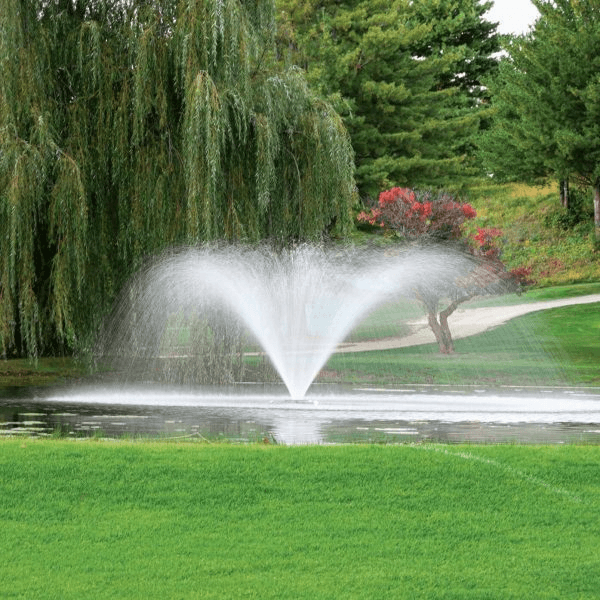
Standing beside the water, you probably picture the perfect spray pattern. Tall and graceful, or wide and lively. Maybe lit up after dark. That vision sells a lot of pumps every spring. Then the reality sets in. The spray looks weak. Or too aggressive for the size of the pond. Fish hide. Algae spreads anyway. Money wasted. The problem is almost never the pond fountain itself. The problem is a mismatch. A fountain picked for the wrong pond shape and size fails at the job, no matter how nice it looks in the box.
Here is how to match pond fountains to what you actually have in your backyard.
Start With the Three Numbers That Matter
Before anything else, grab a tape measure and a notepad. You want three figures.
- Surface area, roughly length times width
- Average depth
- Deepest point
Shallow, deep, and big are not feelings. They are numbers, and pump makers build products around those numbers. Guessing leads to regret.
Pond volume in gallons, using a rough formula, is length in feet times width in feet times average depth in feet times 7.48. A 15 by 10 pond at 2.5 feet average holds around 2,800 gallons.
Write that number down. You will use it again.
Shallow Ponds Under 4 Feet Deep
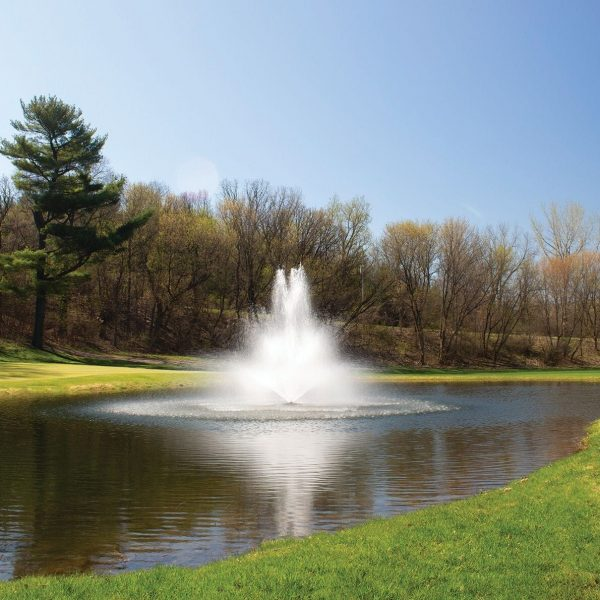
Shallow ponds sit in a sweet spot for fountain pumps. The water column is short, so a submersible pump does not have to fight gravity much. That means more visible spray for less wattage.
Pick a fountain with a low head height rating. Head height is the vertical lift the pump can handle before the flow drops. For a pond two feet deep, a pump rated for six to eight feet of head is plenty.
Watch the flow rate too. A shallow decorative pond around 500 gallons does well with a pump moving 250 to 500 gallons per hour. Too much flow stirs up muck from the bottom and keeps the water cloudy.
A few things to avoid in shallow water.
- Oversized spray nozzles that empty the pond onto the lawn
- Heavy pumps that sink into soft sediment
- Tall pattern heads that catch the wind and drift
Shallow ponds also freeze faster in winter. Plan to pull the pump out before the first hard freeze, or keep water moving with a small de-icer if you want year-round operation.
Deep Ponds Between 4 and 8 Feet
Deep ponds change the math. The bottom holds colder water that never really mixes with the top unless something forces it to. Fish at depth can run short on oxygen during warm months, even when the surface looks fine.
A floating pond fountain still adds beauty here. Spray creates sound and surface movement. Yet the bottom stays mostly untouched.
Two smart moves for deeper setups.
- Choose a fountain with a higher horsepower rating, usually half a horse or above, for ponds over 3,000 gallons.
- Pair it with a separate bottom diffused aerator if you keep fish.
Some owners try to solve everything with one big fountain. That usually ends badly. An oversized fountain for the surface area splashes hard, stresses plants, and still fails to reach the bottom layer.
Head height also starts to matter. A pump with a weak lift rating loses flow faster as water rises higher. Check the manufacturer’s curve, not just the headline GPH number.
Big Ponds Over a Quarter Acre
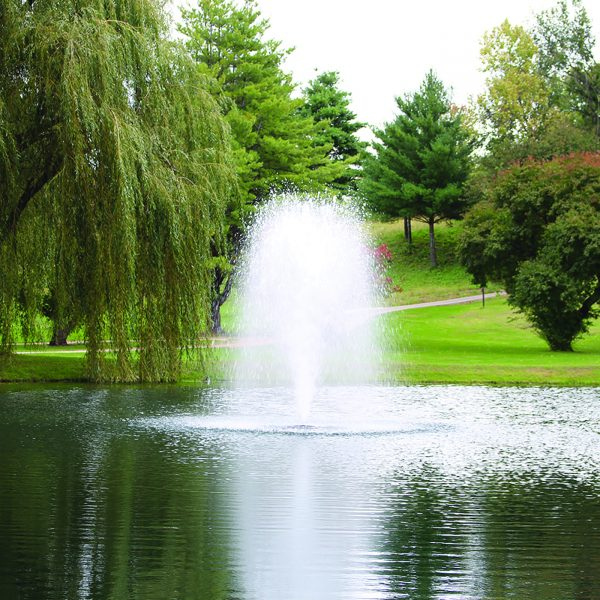
Larger ponds play by different rules. An acre of water is about 326,000 gallons. No backyard style fountain pump handles that. You move up to what the industry calls ponds or lake fountains.
These floating units run on 120 or 240-volt power. They come with flotation collars, long power cables for shore-mounted control panels, and spray patterns measured in feet of height and spread.
A rough starting point for big ponds.
- One horsepower unit per half acre of surface water
- Two horsepower units for up to a full acre
- Three horsepower or larger for ponds above an acre
Spray pattern choice matters more than you might think. A tall, narrow pattern looks dramatic from a distance, which suits large properties. A wider pattern, like a trumpet or crown shape, moves more water across a smaller area and helps reduce algae zones.
Power draw adds up fast at this scale. A two-horsepower fountain running daily can pull a serious chunk of the electric bill. Run it on a timer, maybe six to eight hours during daylight, instead of around the clock.
Matching Shape, Not Just Size
Pond shape gets skipped a lot, and it should not.
Long, narrow ponds do better with a centered fountain that has a tall, slim spray pattern. The water column moves vertically and falls back in line with the pond’s shape.
Wide, oval, or kidney ponds handle wider spray patterns without flooding the edges. You can also place two smaller fountains instead of one big central unit.
Irregular shapes need a little testing. Set the pump in the deepest open area first, run it, and watch where the spray lands. Move it until the pattern sits inside the water and not on your patio.
A Quick Match Check Before You Buy
Before clicking the order, run through this.
- Pond volume matched to GPH, roughly full turnover every two hours.
- Head height rating at least equal to pump depth plus spray height
- Pattern width is smaller than the pond width
- Power source within safe cable reach through a GFCI outlet.
- Winter storage plan ready
Match the fountain to the pond you have, not the pond you wish you had. The water will look better. The fish will do better. And the pump will last long enough to feel like it was worth the money.