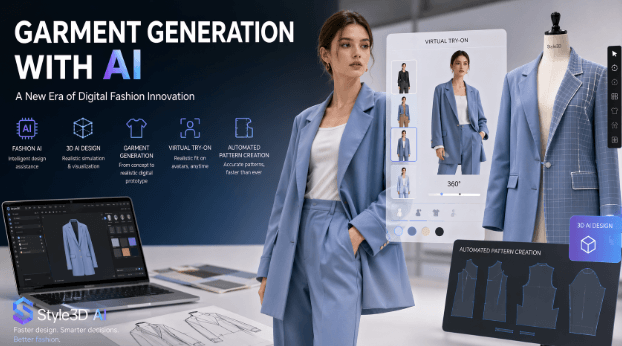
Fashion has always relied on vision, timing, and technical skill. Today, those three elements are being transformed by intelligent digital tools that help brands move from concept to creation with far greater speed. What once required repeated sampling, long approval cycles, and constant revisions can now begin in a realistic digital environment where ideas are tested before production starts.
One of the most important changes driving this shift is garment generation. Instead of treating design as a slow sequence of separate tasks, modern platforms allow teams to create, visualize, adjust, and refine garments in one connected workflow. Style3D AI is part of this movement, helping fashion businesses combine creativity with technical accuracy in ways that were difficult to achieve only a few years ago.
This matters because the industry no longer has room for wasted time, wasted fabric, or delayed decisions. Brands need to respond quickly to trends while still maintaining quality, consistency, and a clear design identity. As fashion AI, 3D AI design, garment generation, virtual try-on become part of everyday development, digital fashion innovation is shaping a smarter and more flexible future.
Another reason this shift is gaining momentum is collaboration. Designers, pattern makers, merchandisers, and production teams often work across different locations, and miscommunication can slow everything down. A shared digital garment gives everyone the same visual reference, making feedback clearer and reducing repeated explanations. When a team can see updates instantly, compare options side by side, and approve changes with confidence, the workflow becomes more efficient. In a competitive market, that kind of clarity is not just helpful. It is becoming essential for brands that want to stay relevant and agile.
Why Fashion Design Is Becoming More Digital
Traditional apparel development is often expensive and slow. A single design may pass through sketches, pattern drafting, sample creation, fit sessions, revisions, and re-sampling before it is ready for production. Each stage takes time, and every delay can affect launch schedules, material planning, and overall cost.
Digital systems reduce many of those bottlenecks. Designers can build garments on screen, review how they look, and make changes before producing physical samples. That means decisions happen earlier, teams work with clearer information, and fewer resources are lost to trial and error.
The move toward digital creation is also being pushed by customer expectations. Consumers want fresh collections, better fit, and a more engaging online shopping experience. To meet that demand, brands need tools that support quick iteration without sacrificing detail. Intelligent design platforms help make that possible by speeding up technical work while giving creative teams more freedom to explore.
What Garment Generation Really Means
Garment generation is the process of creating digital apparel concepts and development-ready clothing assets with the help of advanced software. In practical terms, it turns design intent into visual and structural output more efficiently than traditional workflows alone.
That process goes beyond a simple sketch. A modern garment generation system can support silhouette development, color experimentation, style adjustment, and realistic clothing simulation. Instead of imagining how a piece might look once sampled, teams can review a detailed digital version much earlier.
Style3D AI strengthens this process by linking creative design with practical development needs. It gives fashion professionals a way to move from concept to technical planning with greater clarity. That connection is valuable because successful fashion design is never just about appearance. It also depends on fit, construction, and production readiness.
How Style3D AI Improves the Design Process
Style3D AI brings several essential capabilities into one workflow, making it easier for brands to create garments with speed and control. Rather than forcing teams to work across disconnected systems, it supports a more unified approach to digital design.
Its core advantages include:
- garment generation for faster concept development
- virtual try-on for realistic fit and style evaluation
- automated pattern creation for stronger technical efficiency
- realistic simulation for clearer communication across teams
- faster revisions when collections need quick adjustments
This combination helps remove friction from the development cycle. A design update does not have to trigger a long chain of manual corrections. Teams can refine a garment digitally, review the results quickly, and move forward with better accuracy.
For design leaders, this creates a more responsive environment. For technical teams, it means fewer unnecessary corrections. For brands, it supports quicker launches and smarter use of time.
See also: The Future of Interface Design
Why Virtual Try-On Matters Beyond Online Shopping
Virtual try-on is often associated with digital retail, but its value begins much earlier. During development, teams need to understand how a garment fits, drapes, and appears on different body shapes. Doing that through digital simulation helps reduce uncertainty before physical sampling even begins.
With virtual try-on, designers and product developers can inspect tension points, shape balance, and overall visual appeal from multiple angles. That makes internal reviews more useful and helps teams make better choices without waiting for sample garments to arrive.
There is also a clear retail benefit. When customers are given a stronger sense of how clothing may look and fit, confidence can improve. Better product visualization can support purchase decisions and may help reduce returns linked to sizing confusion. In that sense, virtual try-on supports both product development and customer experience.
Automated Pattern Creation and Technical Accuracy
Pattern development is one of the most technical stages of fashion production. It requires precision, experience, and a deep understanding of garment construction. Even skilled teams can spend many hours correcting patterns after early fit tests reveal issues.
Automated pattern creation helps shorten that cycle. By using digital design data as a starting point, intelligent systems can support pattern development more efficiently and reduce repetitive manual work. This does not replace the judgment of technical designers. Instead, it gives them a more advanced foundation to build from.
Style3D AI supports this connection between visual design and technical execution. That means fewer gaps between what is imagined creatively and what is delivered in production. When teams can move from concept to pattern work more smoothly, they save time and improve consistency across the entire development process.
A Smarter Path Toward Sustainability
Faster design is important, but sustainability is just as critical. The traditional sample-making process can involve large amounts of fabric, repeated shipping, and multiple physical revisions. Those steps add waste long before a garment reaches the customer.
Digital workflows offer a cleaner alternative. When garments are tested, refined, and reviewed digitally, brands can reduce the number of physical samples required. That can lower material waste, reduce transport needs, and support more responsible development practices.
There is also a planning advantage. Digital tools make it easier to review styles carefully before committing to production. Instead of moving forward on guesswork, teams can make choices based on clearer visual and technical information. This helps brands use resources more wisely while maintaining creative quality.
Where Fashion Innovation Goes From Here
The future of fashion will belong to brands that combine creativity with intelligent systems. Designers are still the source of taste, identity, and originality, but now they can build ideas in a more agile environment. That means faster testing, stronger collaboration, and more informed product decisions.
Style3D AI reflects this new direction by bringing garment generation, virtual try-on, and automated pattern creation into one streamlined process. It helps fashion professionals work faster without losing control over quality or detail. That balance is exactly what modern apparel development needs.
As digital tools continue to evolve, the role of fashion AI and 3D AI design will only grow. Brands that adopt these methods early will be better prepared to create collections with speed, accuracy, and confidence. Garment generation is no longer a distant idea. It is becoming a practical foundation for smarter fashion design.